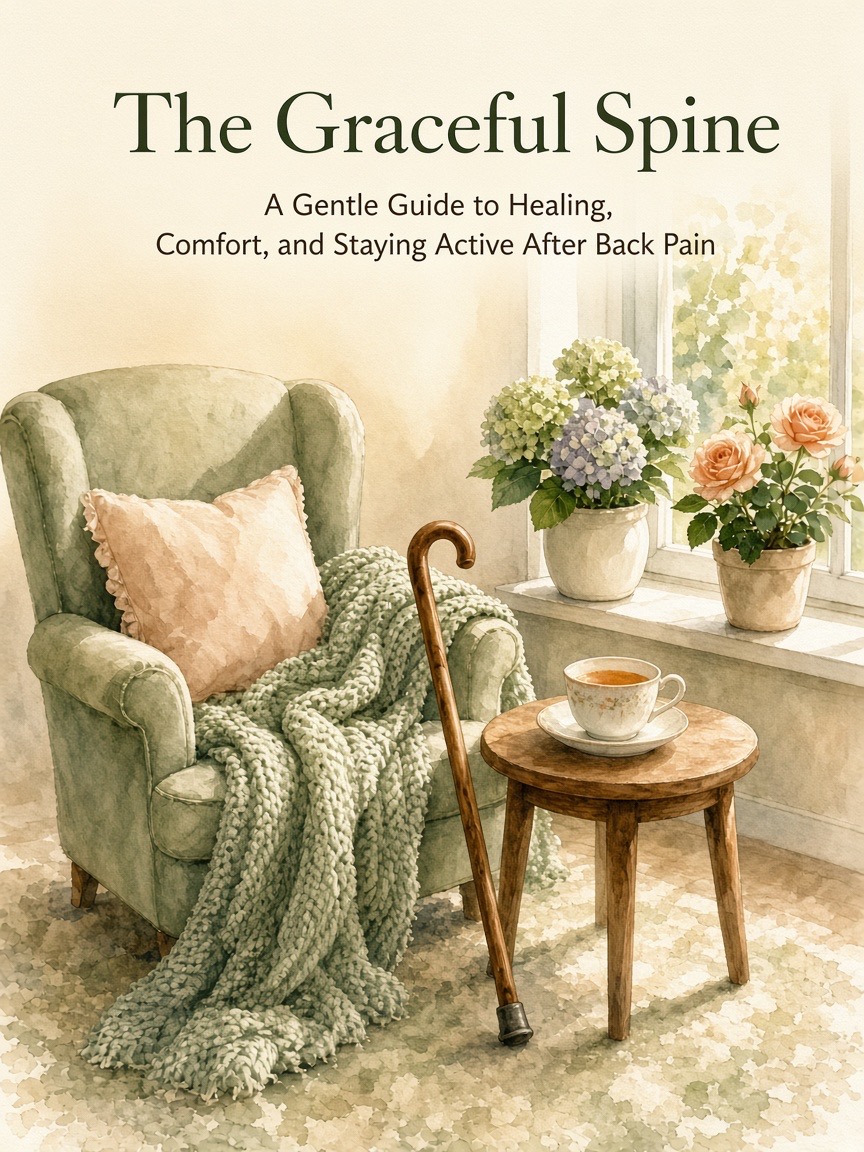
The Graceful Spine
Audiobook by Kathleen Thornsberry
Table of contents — one track per subchapter. Voice: Chirp 3 HD Leda.
Now playing
Tap Play on any subchapter
Chapter 1 Understanding Your Back and What Happened
- Why Your Back Hurts: Age-Related Wear, Not a Broken Bone
- What Scoliosis, Arthritis, and Stenosis Mean for Your Comfort
- The Three Rules to Live By: No Bending, No Lifting, No Twisting
- How the Spine Heals Naturally Without Surgery or Strong Drugs
- Your Role as the Captain of Your Recovery Team
- Why Your Doctors’ Advice Matters But Isn't the Whole Story
- The Power of Patience: Healing Takes Time and Gentle Care
- A Simple Overview of the Spine and Nerves for Everyday Understanding
Chapter 2 Daily Comfort and Pain Relief Without Pills
- Finding Your Best Sitting Positions: Chairs, Cushions, and Posture
- Lying Down for Relief: Side-Lying with Pillows and Supported Back-Lying
- Ice for Acute Pain and Heat for Aching Muscles: When to Use Each
- Gentle Self-Massage and Pressure Points to Release Tension
- Using Heat Wraps, Rice Socks, or Warm Baths to Soothe Your Back
- Breathing Techniques to Calm Pain Signals and Relax Your Body
- Creating a Comfort Corner with Pillows, Blankets, and Soft Lighting
- The Role of Distraction: Music, Audiobooks, and Light Crafts to Ease Discomfort
Chapter 3 Sleeping Well When Your Back Hurts
- Setting Up a Supportive Bed: Mattress Toppers, Firmness, and Pillows
- The Best Sleep Positions: Side Sleeping with a Pillow Between Knees
- How to Roll Out of Bed Without Twisting or Straining Your Spine
- Using a Body Pillow or Extra Pillows to Keep Your Spine Aligned All Night
- Creating a Calming Bedtime Routine with Herbal Tea, Lavender, and Soft Music
- What to Do When Pain Wakes You Up: Gentle Stretches and Repositioning
- Avoiding Sleep Disruptors: Late Meals, Screens, and Stress Before Bed
- When to Consider a Hospital Bed or Recliner for Temporary Sleep Support
Chapter 4 Avoiding Flare-Ups and Protecting Your Back
- Everyday Movements That Strain the Back: Bending at the Waist and Twisting
- The Squat-and-Lift Technique: Using Your Legs, Not Your Back
- How to Reach for Items on the Floor or Low Shelves Without Bending
- Avoiding Sudden Twists: Turning Your Whole Body Instead of Your Torso
- Lifting Rules: Never Lift More Than a Few Pounds and Keep Objects Close
- Household Chores to Delegate or Modify: Mopping, Vacuuming, and Gardening
- Watching Your Posture While Cooking, Cleaning, and Doing Laundry
- Recognizing Early Warning Signs of a Flare-Up and How to Stop It
Chapter 5 Gentle Movement to Build Strength Over Time
- Why Movement Heals: Blood Flow, Lubrication, and Muscle Support
- Start with Ankle Pumps and Wrist Circles While Lying Down
- Pelvic Tilts and Cat-Cow Stretches Done in Bed or on a Mat
- Seated Marching and Leg Slides to Activate Hips and Core
- Wall Sits and Heel Raises for Lower Body Strength Without Back Strain
- Breathing and Gentle Core Engagement Without Crunches
- Walking as Medicine: Starting with 5 Minutes and Building Slowly
- When to Stop: Listening to Your Body’s Signals of Pain vs. Discomfort
Chapter 6 Helpful Tools and Simple Home Modifications
- Using a Reacher or Grabber to Pick Up Items Without Bending
- A Long-Handled Shoehorn and Sock Aid for Dressing Without Strain
- Elevating Your Chair and Bed Height with Risers to Avoid Deep Bends
- A Toilet Seat Riser and Bath Bench for Safe Bathroom Use
- A Rolling Cart to Carry Items Room to Room Without Lifting
- Kitchen Tools: Jar Openers, Long-Handled Sponges, and Lightweight Cookware
- Organizing Your Home So Daily Needs Are Within Easy Reach
- Car Modifications: Seat Cushions, Steering Wheel Grips, and Getting In and Out
Chapter 7 Nutrition and Hydration for Spinal Healing
- Why Hydration Matters: Water Nourishes Discs and Reduces Stiffness
- Anti-Inflammatory Foods: Berries, Leafy Greens, and Healthy Fats
- Bone Broth and Gelatin for Collagen and Joint Support
- Protein for Tissue Repair: Eggs, Legumes, and Lean Meats
- Magnesium-Rich Foods to Relax Muscles and Nerves
- Vitamin D and Calcium for Bone Strength from Food and Sunlight
- Limiting Sugar, Processed Foods, and Inflammatory Oils
- Herbal Teas for Comfort: Ginger, Turmeric, Chamomile, and Nettle
Chapter 8 Living Silica for Bone and Connective Tissue Health
- What Is Silica and Why It Matters for Your Spine and Joints
- How Silica Supports Collagen Production, Bone Density, and Disc Health
- Natural Food Sources of Silica: Oats, Cucumbers, Bell Peppers, and Greens
- Horsetail Herb: A Traditional Silica-Rich Remedy for Bones and Tissues
- Bamboo Extract as a Concentrated Silica Supplement
- How to Incorporate Silica Into Your Daily Diet and Routine
- Cautions and Considerations When Using Silica Supplements
- Combining Silica with Other Nutrients for Maximum Absorption
Chapter 9 Natural Healing Options Beyond Conventional Medicine
- Acupuncture and Acupressure for Pain Relief and Energy Flow
- Chiropractic Care: Gentle Adjustments for Spinal Alignment
- Massage Therapy: Focusing on the Muscles Around the Spine
- Herbal Remedies: Arnica, Devil’s Claw, and White Willow Bark
- Essential Oils for Pain: Peppermint, Eucalyptus, Lavender, and Frankincense
- Hydrotherapy: Contrast Baths and Epsom Salt Soaks
- Mind-Body Practices: Guided Imagery, Meditation, and Gentle Yoga
- Working with a Naturopath or Herbalist for Personalized Support
Chapter 10 Keeping Your Spirits Up While You Heal
- The Emotional Side of Recovery: Grief, Frustration, and Hope
- Staying Connected: Phone Calls, Video Chats, and Visits from Loved Ones
- Finding Joy in Simple Pleasures: Reading, Music, and Bird Watching
- Setting Small, Achievable Goals Each Day to Build Confidence
- Gratitude Practice: Noticing What Is Going Right Despite the Pain
- Creative Outlets: Knitting, Drawing, Writing, or Journaling
- Spiritual Support: Prayer, Meditation, or Time in Nature
- When Sadness Persists: Recognizing Depression and Seeking Help
Chapter 11 Signs You Should Call Your Doctor
- New or Worsening Pain That Doesn’t Respond to Rest or Home Care
- Numbness, Tingling, or Weakness in Your Legs or Feet
- Loss of Bladder or Bowel Control: A Medical Emergency
- Fever, Chills, or Redness Around Your Back Suggesting Infection
- Pain That Wakes You at Night or Is Worse When Lying Down
- Sudden Difficulty Walking or Standing Without Support
- Unexplained Weight Loss Along with Back Pain
- Trusting Your Gut: When Something Just Doesn't Feel Right
Chapter 12 Good Questions for Your Doctor and Physical Therapist
- Ask Your Doctor: What Exactly Is Causing My Pain and How Will It Change?
- Ask About Imaging: Do I Need Follow-Up Scans and When?
- Ask About Medications: What Are the Risks of Painkillers and Alternatives?
- Ask Your Physical Therapist: What Movements Are Safe for Me Right Now?
- Ask How to Tell the Difference Between Good Pain and Bad Pain
- Ask About a Home Exercise Program: Simple Routines I Can Do Daily
- Ask for Referrals: Can You Recommend a Good Massage Therapist or Acupuncturist?
- Ask About Natural Supplements: Which Ones Might Help My Condition?
Chapter 13 Navigating Life Without Palliative Care Options
- Understanding What Palliative Care Is and Why It May Not Be Available
- Building Your Own Support Network: Family, Friends, and Community
- Creating a Pain Management Plan with Your Primary Care Doctor
- Exploring Local Resources: Senior Centers, Church Groups, and Volunteer Services
- Using Telehealth to Access Pain Specialists and Counselors Remotely
- Self-Advocacy: How to Ask for the Care You Need Despite Limitations
- Financial Help: Finding Low-Cost or Sliding-Scale Natural Health Providers
- When Home Care Is Needed: Hiring Help and What to Look For
Chapter 14 Advice for Caregivers and Family Members
- Understanding What She’s Going Through: Pain, Fear, and Loss of Independence
- How to Offer Help Without Taking Over: Ask, Listen, and Respect Her Choices
- Practical Ways to Help: Meals, Housework, Transportation, and Errands
- Learning the Safe Way to Help Her Move: Transferring and Lifting Techniques
- Encouraging Without Pressuring: Gentle Motivation for Movement and Self-Care
- Taking Care of Yourself: Caregiver Stress, Burnout, and Seeking Support
- Creating a Calm and Positive Home Environment for Healing
- When to Step In: Recognizing Signs She Needs More Help Than You Can Give
Chapter 15 Managing Medications and Reducing Reliance on Pills
- Understanding Common Pain Medications: Acetaminophen, NSAIDs, and Muscle Relaxants
- The Risks of Long-Term Opioid Use and Safer Alternatives
- How to Talk to Your Doctor About Tapering Off Medications
- Natural Anti-Inflammatories: Turmeric, Ginger, and Boswellia
- Topical Pain Relief: Capsaicin Cream, Arnica Gel, and Essential Oil Blends
- The Role of Vitamin C, Vitamin D, and Omega-3s in Reducing Pain
- Keeping a Pain and Medication Diary to Track What Works
- Never Stop Medications Cold Turkey: Safe Tapering and Supervision
Chapter 16 Building a Daily Routine That Supports Healing
- Morning Rituals: Gentle Stretches, Hydration, and Setting Intentions
- Midday Breaks: Lying Down, Icing, and Walking for Five Minutes
- Afternoon Activities: Light Chores, Reading, and Social Time
- Evening Wind-Down: Heat Therapy, Gentle Stretching, and Relaxation
- Incorporating Small Movement Breaks Throughout the Day
- Balancing Rest and Activity: Listening to Your Body’s Signals
- Using a Timer or Alarm to Avoid Sitting Too Long in One Position
- Reviewing Each Day: What Helped, What Hurt, and Adjusting for Tomorrow
Chapter 17 The Power of Breath and Mind-Body Connection
- How Deep Breathing Reduces Pain by Calming the Nervous System
- Simple Breathing Exercises: Belly Breathing, 4-7-8, and Alternate Nostril
- Guided Imagery: Visualizing Healing Light Flowing Through Your Spine
- Meditation for Pain: Using Apps, Recordings, or Silence
- Body Scan Meditation to Identify and Release Tension
- Affirmations for Healing: Words to Replace Fear with Hope
- The Role of Faith and Prayer in Your Recovery
- How to Stay Present and Avoid Worrying About the Future
Chapter 18 Adapting Your Home for Safety and Independence
- Clearing Pathways to Prevent Trips and Falls
- Installing Grab Bars in the Bathroom and Near the Bed
- Improving Lighting in Hallways and Stairs for Visibility
- Arranging Furniture for Easy Navigation Without Obstacles
- Using a Bedside Table or Caddy to Keep Essentials Within Reach
- Creating a Station for Your Ice Packs, Heat Pads, and Pillows
- Setting Up a Home Gym in a Small Space for Your Gentle Exercises
- When to Consider a Walker or Cane for Extra Stability
Chapter 19 Long-Term Habits for a Stronger, Healthier Back
- Maintaining Good Posture While Sitting, Standing, and Walking
- Strengthening Your Core and Back Muscles with Daily Practice
- Regular Walking as a Lifelong Habit for Spinal Health
- Continuing Gentle Yoga, Tai Chi, or Qi Gong for Flexibility
- Eating for Bone Health as You Age: Calcium, Vitamin K, and Silica
- Staying Hydrated Every Day to Keep Discs Plump and Healthy
- Listening to Your Body: Knowing When to Rest and When to Move
- Yearly Check-Ins with Your Doctor and Natural Health Practitioners
Chapter 20 Finding Hope and Living Fully Again
- Accepting Your New Normal Without Losing Your Sense of Self
- Celebrating Small Victories: Every Step Forward Matters
- Reconnecting with Hobbies and Passions in Adapted Ways
- Building a Community of Support: Friends, Family, and Like-Minded People
- Helping Others: Sharing Your Story and Wisdom with Those in Similar Pain
- Staying Open to New Treatments and Natural Discoveries
- The Role of Gratitude, Laughter, and Love in Healing
- Your Back Is Just One Part of You: Life Is Still Full of Possibility